
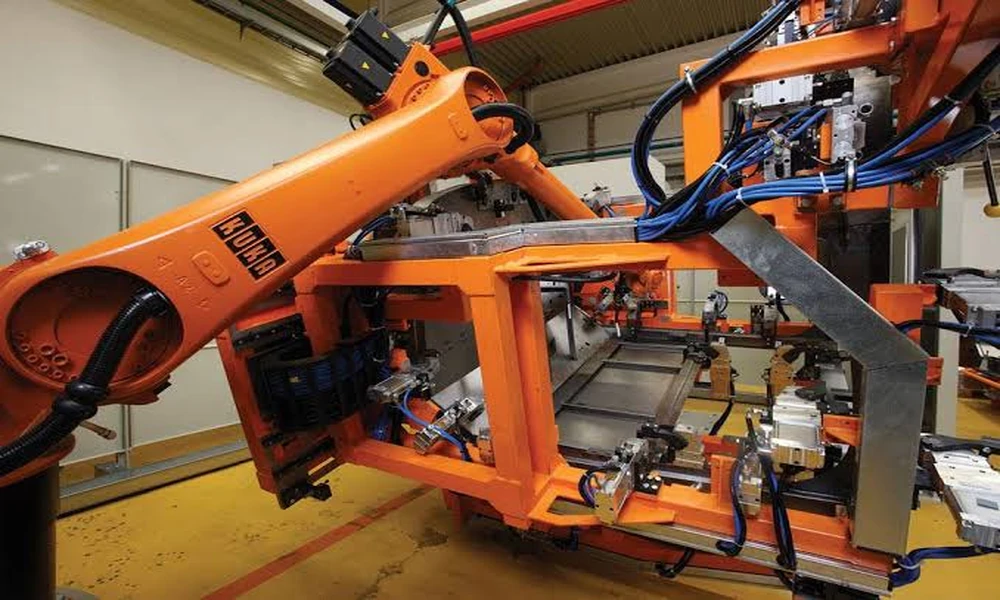
Small and medium-sized manufacturers have long seen the potential of robotics, but the difficult part was often everything around the arm. Fixtures, tooling, programming, safety, commissioning and uncertainty about future products could turn a seemingly affordable robot into an open-ended engineering project. Automation is becoming more accessible because several of those surrounding elements are now easier to package, configure and reuse.
The complete project cost is easier to define
An arm price says little about the full investment. SMEs also need grippers, machine interfaces, safety measures, commissioning, training and support, and they have less capacity than a large plant to absorb unclear scope. Packaged applications and more standardised components can make the boundary between supplied functionality and site-specific work easier to understand. That helps managers compare the investment with the labour released, machine hours gained and expected changeover burden.
Flexible tooling reduces the need for custom mechanics
Programmable electric grippers can cover several part dimensions, while vacuum, magnetic and compliant tools address other surfaces and geometries. Tool changers may make one arm useful across more than one task. The important step is still practical testing with a representative part family because usable payload, centre of gravity, acceleration and surface marking matter alongside headline grip force. Starting with a narrow, stable application keeps the first project manageable.
Software is shifting routine work away from specialists
Graphical setup and application-oriented interfaces can turn dimensions, pickup points and workspace limits into much of the logic that once had to be programmed manually. The important question is whether routine product changes can be handled by authorised production staff while diagnostics remain clear enough for maintenance when something goes wrong. A friendly interface is useful only when it reduces specialist work without hiding the boundaries of the validated application.
Compact cells fit factories that cannot rebuild the floor
Many SMEs have to automate inside an existing workshop rather than design a new production line around robotics. Compact cells, modular fixtures and relocatable setups can make that possible, but a small footprint is useful only if it preserves material flow, maintenance access and safe operator routes. A cell that blocks replenishment or forces awkward manual handling simply moves the bottleneck elsewhere. Layout therefore remains part of the accessibility calculation.
Repeatable applications reduce uncertainty
Machine tending, palletising, packaging and straightforward transfer tasks contain patterns that suppliers can encode in software and hardware. For an SME deciding whether that standardisation fits its own production, it is more useful to learn more about supported workflows, device compatibility, diagnostics and changeover limits than to compare robot arms only by headline specifications. Reusing known application patterns lets engineering effort focus on the machine-specific interface, part presentation and safety instead of rebuilding every layer from scratch.
The first cell should create reusable capability
A sensible first project is repetitive, measurable and operationally useful without being the factory’s most complicated process. It gives the team a controlled way to learn about setup, recovery, maintenance and change control. Once operators are trained and common components are approved, later projects become less uncertain. Technology lowers the entry barrier, but lasting accessibility comes from turning the first installation into repeatable internal knowledge rather than treating it as an isolated purchase.
Accessibility also depends on ownership after commissioning
An SME should know who will update backups, replace wear parts, approve recipe changes and contact external support when a problem exceeds local competence. These responsibilities are easy to overlook when a supplier demonstrates a finished cell, yet they determine whether the system remains useful after the project team leaves. Automation becomes genuinely accessible when ordinary operation is manageable internally and the boundary for specialist support is clear.
