
Key Points:
- Cable choices should match equipment needs, distance, speed, and future growth.
- Early trade coordination can prevent blocked routes and unnecessary cable rerouting.
- Testing standards should be defined before the first cable run is installed.
- Clear labeling makes future troubleshooting, moves, and upgrades much easier.
- Practical spare capacity can support future expansion without unnecessary overbuilding.
- Change control helps prevent small project revisions from creating wider rework.
- Careful planning reduces demolition, repeated labor, and long-term maintenance problems.
Commercial cabling projects often become expensive because key decisions are made too late. A blocked pathway, crowded telecom room, or unsuitable cable type can force teams to redo work that was already finished. For Austin businesses, careful planning before installation can prevent many of these problems. It also reduces the chance of reopening ceilings, changing cable routes, or replacing connections that should have been planned correctly from the beginning.
Rework becomes even more difficult once a property is occupied. Offices, warehouses, medical facilities, and multi-floor buildings may have employees or customers depending on the network throughout the day. Any correction then needs careful scheduling. A strong plan connects building conditions with equipment needs, future growth, testing, and project timing. The goal is not to make the project complicated. It is to solve likely problems while changes are still easy and affordable.
Network Planning Starts With a Careful Site Review
A qualified network cable contractor should begin with a detailed site walkthrough rather than simply counting required outlets. The team should check ceiling access, risers, existing pathways, telecom rooms, power locations, and active equipment. Drawings are useful, but they may not show a crowded cable tray or a blocked route above a finished ceiling. Finding these limits early gives installers time to choose better routes before labor and materials are committed.
The walkthrough should also confirm how each space will be used. A room marked as an office may later become a training area with 30 laptops and several wireless devices. A warehouse may need cameras, access points, scanners, and networked equipment instead of standard desk connections. These details affect cable counts, outlet positions, and pathway needs. When teams understand the real use of each area, fewer last-minute additions are needed after construction is complete.
Cable Routes Need Early Trade Coordination
Cable pathways should be reviewed alongside electrical, security, mechanical, and ceiling work because several trades often need the same spaces. A route that looks open early in the project may become blocked once conduit or ductwork is installed. Short coordination meetings can prevent that problem. Teams can confirm pathway ownership, required clearance, and installation order before work begins, rather than forcing cabling crews to create longer or less practical routes later.
Timing matters as much as route selection. Installing cable before ceilings close usually gives technicians easier access and makes labor more predictable. Once a building is occupied, the same work may require lifts, escorts, evening shifts, or temporary ceiling removal. For example, a floor that could be completed during two daytime shifts may take several evenings after tenants move in. Early scheduling can therefore reduce both disruption and unnecessary labor costs.
Cabling Choices Should Match Equipment and Growth
Experienced network cabling companies should explain why specific cable types, fiber links, pathways, and termination methods suit the project. A business may use copper for workstations, fiber between telecom rooms, and additional capacity for cameras or wireless access points. Distance, speed, Power over Ethernet requirements, and equipment compatibility all matter. Using one standard specification everywhere may look simple, but it can create limits once the network begins supporting real business traffic.
Future growth should be discussed without turning the project into unnecessary overbuilding. If a company expects to add 40 employees within eighteen months, spare ports or pathway capacity may be useful. Installing unused infrastructure across every area, however, can increase costs without adding much value. A better approach is to identify the spaces most likely to grow and prepare those areas. This requires more planning now, but it can prevent major changes later.
Network Testing Should Be Planned Before Installation
A second network cable contractor checkpoint should focus on testing before the first cable run is installed. Businesses should ask what will be tested, which standards will apply, and what records they will receive afterward. A cable that simply connects is not always performing correctly. Poor terminations, damaged runs, or excessive signal loss may remain hidden until traffic increases. Defining the testing process early makes project closeout much more reliable.
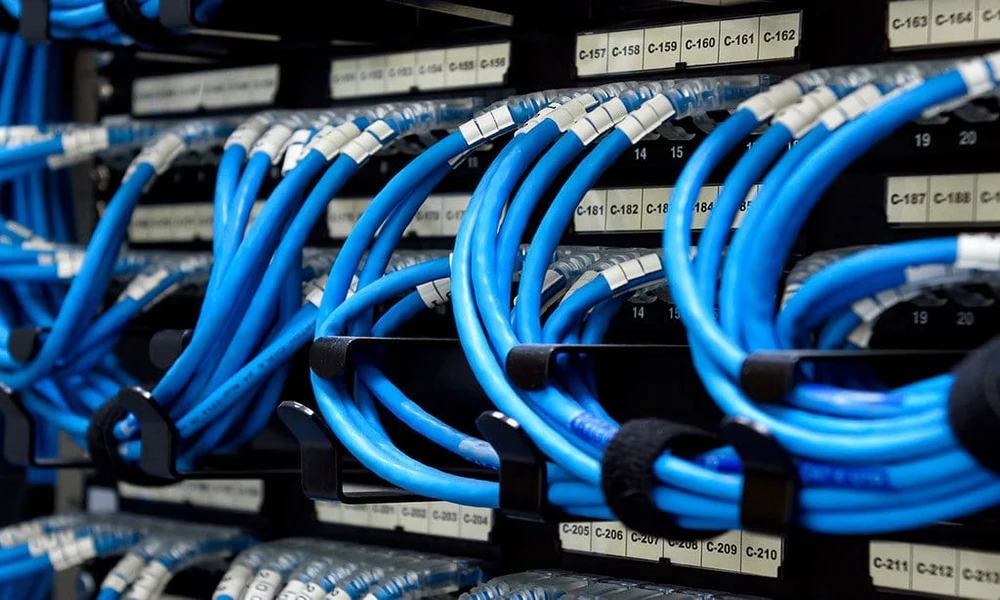
Labeling should be planned at the same time. Wall outlets, patch panels, racks, and backbone links need a clear naming system that another technician can understand quickly. This may seem like a small detail during construction, but it becomes valuable later. Six months after installation, a department may move or an access point may fail. Good labels can save hours of tracing and reduce the chance of disconnecting a working link by mistake.
Cabling Documentation Reduces Future Guesswork
Reliable network cabling companies should treat closeout records as part of the project, not as an optional extra. Final drawings, test reports, cable labels, port maps, and rack information give the IT team a clear picture of what was installed. Without those records, every future change starts with investigation. Technicians may need to trace cables above ceilings simply to confirm which route or port supports one part of the building.
Documentation becomes even more important when staff or property ownership changes. The person who managed the original installation may not be there two years later. Good records preserve useful information about routes, capacity, and equipment connections. They also make future expansion easier because technicians can quickly see what space remains. That helps prevent another isolated fix that solves one immediate issue but makes the overall network harder to understand and maintain.
Change Control Keeps Small Problems From Growing
Even carefully planned projects change. Furniture layouts move, departments request additional outlets, equipment choices shift, and construction schedules change. The important part is having a clear process for handling those requests. Teams should know who approves additions, how revised quantities are recorded, and whether a change affects pathways, switch ports, or completion dates. Without that process, small requests can build up until the finished installation no longer matches the original plan.
A simple change log can make a large project much easier to control. Suppose a conference room changes into a training space and suddenly needs eight wall connections and extra wireless coverage. That request may also affect switch capacity, pathway space, rack layout, and testing. Reviewing the full impact before installation continues is far easier than discovering those effects later. One controlled decision can prevent several rounds of expensive correction.
Conclusion
Avoiding cabling rework depends on making important decisions while they are still easy to change. Site conditions, equipment needs, cable routes, testing, documentation, and scope changes should all be reviewed before installation moves too far forward. Businesses that spend more time on these details early usually face fewer surprises later. They also gain infrastructure that is easier to maintain, troubleshoot, and expand as staff, devices, and network requirements continue to grow.
CMC Communications supports Austin commercial properties with structured cabling, network cabling, fiber installation, testing, and related infrastructure services. Their team can review building conditions, pathways, equipment needs, project timing, and future growth before installation begins. This wider planning approach can help businesses avoid unnecessary demolition, repeated labor, and poorly documented changes while creating a network foundation that remains easier to manage and expand as technology needs continue to develop.
Frequently Asked Questions
Question: What should businesses review before commercial cabling work begins?
Answer: They should check device locations, cable types, telecom rooms, pathways, switch capacity, access limits, testing requirements, and future growth plans. Reviewing these points together helps identify problems before crews install infrastructure that may later need to be moved or replaced.
Question: Why can poor pathway planning create expensive rework?
Answer: Cable routes often share ceiling and riser space with electrical, mechanical, and security systems. If those routes are not coordinated early, technicians may face blocked pathways or longer cable runs. Early planning helps protect the intended route and reduces the need to reopen finished areas.
Question: How does cable testing reduce future network problems?
Answer: Proper testing can identify damaged runs, weak terminations, incorrect connections, or performance issues before the network becomes fully active. Fixing those problems during project closeout is usually easier and less disruptive than finding them after employees depend on the connection.
Question: Why should businesses request closeout documentation?
Answer: Labels, test reports, port maps, rack details, and updated drawings give future technicians a reliable reference. They make troubleshooting, office moves, equipment changes, and network expansion much faster while reducing unnecessary cable tracing.
Question: How much spare capacity should a business plan for?
Answer: Spare capacity should match realistic growth. Planned hiring, new cameras, additional access points, or future departments may justify extra ports or pathway space. The goal is to prepare for likely changes without paying for large amounts of infrastructure that may never be used.
| CONTENT CHECKLIST | |
| Total Word Count | 1530 |
| Grammarly Premium Score | 93 |
| Readability Score | 42 |
| Plagiarism | 100% |
| Primary Keyword Usage | 2 times |
| Secondary Keywords Usage | 2 Times |
| Highest Word Density | 1.5 |
| Brand Name Integration | 1 Time |
| Ai Detection Score | 22 |
| Maximum Paragraph Length | 6 Lines |
| FAQs | 5 |
