
What Clean Room Injection Molding Is
Clean room injection molding is the production of plastic components by injection moulding within a controlled environment classified to ISO 14644-1 standards, where airborne particulate levels are managed to prevent contamination from reaching the moulded parts. Standard injection moulding takes place in general production environments where particulate counts are not controlled. For medical device components that must be assembled into sterile or implantable products, this level of environmental control is insufficient. Components moulded in an uncontrolled environment carry surface contamination that may be difficult to remove through subsequent cleaning and that contributes to the bioburden the device carries before sterilisation.
Why Injection Moulding in a Cleanroom Is Different
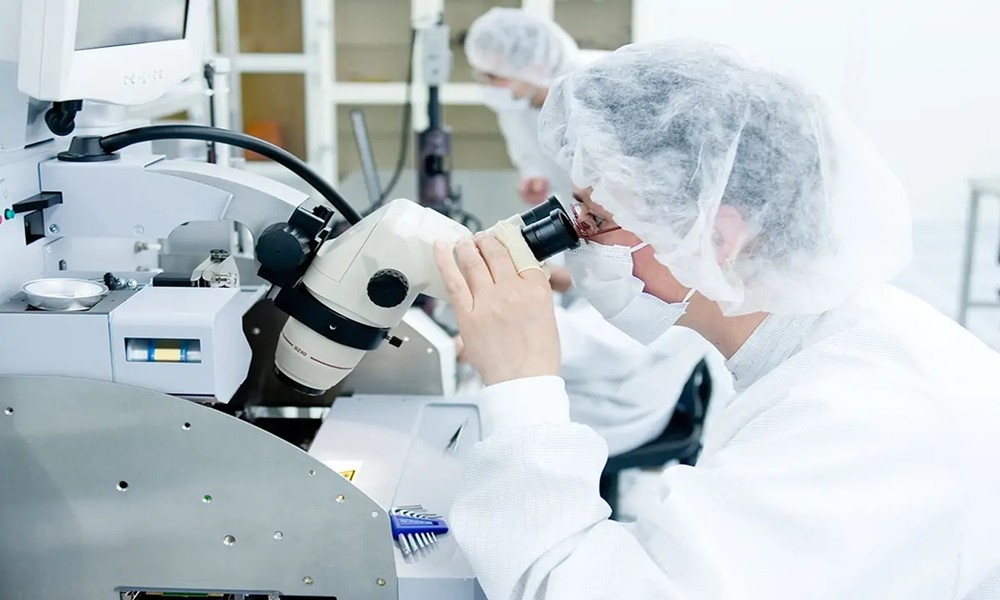
Clean room injection molding requires the moulding machine and its peripheral equipment to be installed within the classified space, with all the cleanroom disciplines that entails. Material handling from the dryer to the hopper to the machine barrel must occur within the controlled environment to prevent the ingress of particulate from outside. Tooling changes and maintenance must be conducted by gowned personnel following cleanroom protocols. Runners, sprues, and reject parts must be removed and processed in ways that minimise the particle generation they cause.
The result is a moulded component that leaves the machine already at the particulate level consistent with its classification, without requiring post-moulding cleaning operations that might damage sensitive surface features or introduce cleaning chemical residues.
Materials Used in Clean Room Medical Moulding
Precision medical plastic injection moulding uses medical-grade polymers selected for their biocompatibility, sterilisability, and mechanical performance. Polycarbonate is widely used for transparent housings and luer connectors where visibility and chemical resistance are required. Polyetheretherketone, commonly known as PEEK, provides high strength and chemical resistance for components used in demanding environments. Polysulphone and polyethersulphone offer good thermal stability and biocompatibility for autoclavable instruments. Nylon and polypropylene serve lower-risk applications where cost is a primary consideration alongside performance.
“In precision manufacturing, the material you choose shapes everything that comes after,” noted Singapore’s Economic Development Board in guidance to the medical technology sector. This applies with particular force to medical device polymer selection, where material decisions affect regulatory compliance, sterilisation compatibility, and long-term device performance simultaneously.
Dimensional Control in Clean Room Moulding
Clean room injection molding achieves dimensional accuracy through the combination of tool design, material selection, and process parameter control. Polymer shrinkage during cooling must be accurately predicted and compensated for in the tool design; different materials shrink at different rates, and the same material can shrink differently in thick and thin sections within the same part. Process parameters including melt temperature, injection pressure, hold pressure, and cooling time must be set within validated ranges to produce consistent dimensions across the production run.
First article inspection, using coordinate measuring machines and optical comparators, verifies that the moulded component meets the dimensional specification before production commences, and in-process inspection confirms that dimensions remain within specification during production.
Regulatory Requirements for Clean Room Moulded Components
Components produced by clean room injection moulding for medical use must be manufactured under quality management systems certified to ISO 13485. Process validation following the IQ/OQ/PQ sequence generates the documented evidence that the moulding process consistently produces compliant output. Material certificates demonstrating biocompatibility testing to ISO 10993 standards support the OEM’s regulatory submission. Device history records linking each production batch to its materials, process parameters, and inspection results provide the traceability that post-market surveillance and field complaint investigation require.
The regulatory documentation package for a clean room moulded component is as important to the OEM’s market authorisation as the component itself.
The Clean Room Facilities That Medical Moulding Requires
Controlled environment plastic moulding for medical devices requires ISO Class 7 or Class 8 classified facilities depending on the device type and its contamination sensitivity. ISO Class 7 facilities limit particulate to 352,000 particles per cubic metre at 0.5 microns, suitable for most medical device assembly and moulding operations. Class 8 facilities provide a controlled environment appropriate for lower-risk sub-assembly and component production. The choice of classification is determined by the device’s regulatory category, the clinical risk of contamination, and the sterilisation method to be applied.
Choosing a Partner for Clean Room Medical Moulding
Selecting a clean room injection molding partner for medical device components requires evaluating the facility’s ISO classification and environmental monitoring data, the quality management system certification, the range of medical-grade materials available, and the supplier’s experience with comparable component types. Clean room injection molding partners who combine certified facilities, validated processes, and ISO 13485 quality systems provide the production foundation that medical device components require.
Clean room injection molding within a certified, validated environment delivers the dimensional precision and contamination control that medical device components demand.
