
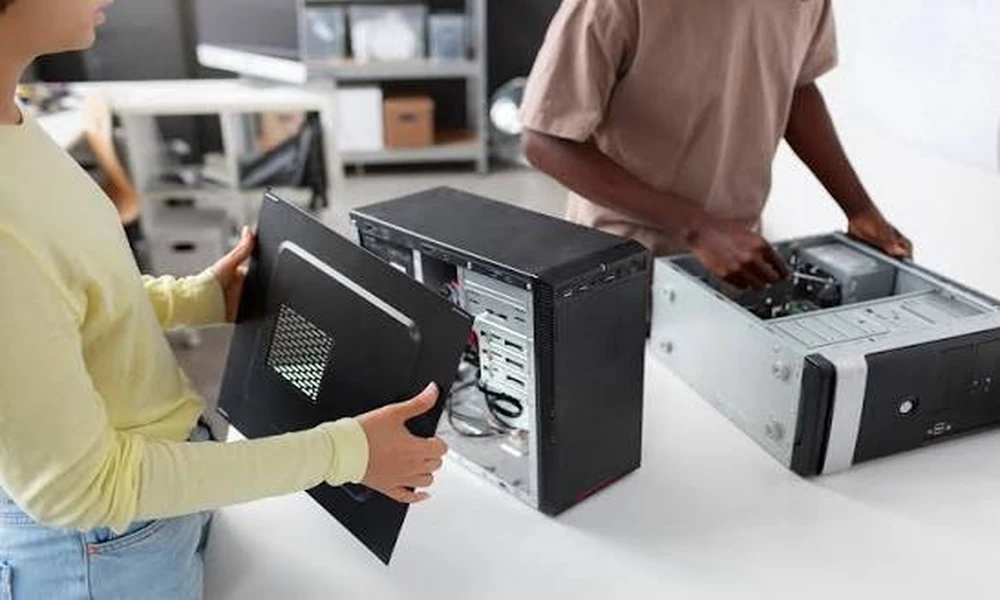
Getting rid of old office technology is commonly pictured as a single act: someone calls a collector and the equipment disappears. What that picture leaves out is everything that ought to happen afterwards, both to the data on the devices and to the materials inside them. Properly run it asset disposal services manage the whole sequence, and the way they do it determines how much of the equipment is reused, recovered or lost to landfill.
What the Service Covers
A complete service takes responsibility for equipment from the moment it leaves the customer’s premises until every component has reached a final, documented destination. That includes collection and transport, an itemised audit, sanitisation of storage media, testing and refurbishment of anything reusable, dismantling of the remainder, and delivery of separated materials to appropriate recyclers. Reporting ties the stages together. A collection without the later steps is haulage, and should not be mistaken for disposal.
The Equipment That Usually Gets Forgotten
Computers and servers are easy to remember. The items that tend to slip through are the peripheral ones: network switches and routers, desk phones, uninterruptible power supplies, projectors, barcode scanners, card terminals, cables and spent toner cartridges. Many of these contain batteries or stored configuration data. Old mobile phones often sit in drawers for years. A useful first step is a walk through the premises, including store rooms and comms cupboards, to list what is actually there.
Reuse Comes Before Recycling
Extending the working life of a device is the most effective environmental outcome available, because most of the energy and raw material associated with a computer is consumed in manufacturing it. A laptop refurbished and used for another three years displaces the production of a new one. Good providers therefore test equipment for reuse first and recycle only what cannot be resold or donated. Reuse also returns some value to the owner, which recycling alone seldom does.
Handling the Data First
Neither reuse nor recycling should begin until stored information has been dealt with. Every device with storage is identified during the audit and routed through data destruction by a method suited to its condition and contents: verified erasure for working drives that will be reused, physical destruction for those that are faulty or too sensitive. The outcome is recorded against each serial number. Only then is the hardware released to the refurbishment or dismantling line.
What Responsible Recycling Recovers
Equipment that cannot be reused is taken apart by hand or machine and sorted into material streams. Steel and aluminium come from casings and frames, copper from cables and transformers, and gold, silver and palladium from circuit boards and connectors. Plastics are separated by type where possible. Each stream goes to a processor that returns it to manufacturing. Recovering these materials reduces the demand for mining and keeps bulky, slow-degrading waste out of incineration.
Hazardous Components and Why They Matter
Electronics also contain substances that cause harm if released. Lithium batteries can ignite when crushed or punctured. Older monitors and lamps may contain mercury or leaded glass. Circuit boards carry lead solder and flame retardants. These parts have to be removed early in dismantling and sent to facilities licensed to treat them. This is the main reason general waste contractors are unsuitable for the work, and why Singapore regulates how electronic waste is collected and treated.
Logistics: Collection, Packing and Access
Practical details decide how smoothly a job runs. Confirm who will disconnect and move equipment, whether packing materials and trolleys are supplied, and how items will be protected if they are intended for resale. Check loading bay restrictions, lift bookings and any security clearance the building requires. For multi-site organisations, ask whether collections can be coordinated on one schedule. Equipment should be counted and signed for at each location before it is loaded.
How Services Are Typically Priced
Charges usually reflect three things: logistics, data services and the net value of the equipment. Collection may be priced by trip, by volume or by weight. Erasure and destruction are generally charged per device. Against these costs, the provider may credit the resale value of reusable items, which for a recent batch can cover the fees entirely. Low-value or hazardous items such as old monitors and batteries often attract a handling charge. Ask for an itemised quotation.
Storage Media Need Their Own Stream
Loose drives, backup tapes, USB devices and memory cards deserve separate treatment from the general flow of equipment. They are small, easy to misplace and dense with information. Sound practice is to collect them in locked containers, log each one individually, and arrange secure hard disk disposal with a certificate that lists serial numbers. Mixing them into a cage of keyboards and cables is how media goes missing between the office and the processing facility.
Choosing the Right Arrangement
Start by estimating what you have and how often it turns over. A small office with a handful of machines each year may need only an occasional collection with erasure certificates. A larger organisation benefits from a scheduled programme with agreed pricing and reporting. In either case, check the provider’s licences and certifications, ask where materials end up, and insist on itemised records. Choose the arrangement that leaves no device unaccounted for at the end.
